

Ah, artificial intelligence! It’s talked about everywhere, and yet, when I chat with friends or colleagues, I realize that many still confuse the different types of AI that exist today. If you also feel lost in this technological jungle, don’t worry – I’ve been there!
After months of research and personal experimentation with different AI technologies, I decided to create this guide to demystify it all. So, get comfortable with your coffee (or tea), and let’s dive together into the fascinating world of artificial intelligence.
ANI, AGI, ASI: The Trio That Defines the Evolution of Artificial Intelligence

Let’s start with the basics: the three major categories of artificial intelligence that structure our understanding of this field.
ANI: Artificial Narrow Intelligence
ANI (also called weak AI) is what we use every day. It’s specialized AI, designed to excel at a specific task but unable to step outside its area of expertise.
Your voice assistant that reminds you to buy milk? ANI. The system that recommends movies on Netflix? ANI. The algorithm that detects fraud on your credit card? Also ANI.
These systems are impressive in their domain, but they don’t truly “understand” what they’re doing – they execute sophisticated algorithms without genuine awareness or ability to transfer learning.
I still remember my surprise when I asked Siri to tell me a joke and then explain why it was funny… Total failure! And that’s normal: Siri can recite pre-programmed jokes, but doesn’t understand humor. This is the fundamental limitation of ANI.
AGI: Artificial General Intelligence
AGI (or strong AI) remains largely theoretical. It would be an AI capable of understanding, learning, and applying its knowledge to any intellectual problem – like a human, with the same cognitive flexibility.
A true AGI could:
- Learn any intellectual task
- Transfer knowledge from one domain to another
- Understand abstract concepts
- Plan, reason, and solve novel problems
- Possess a form of self-awareness
This is the type of AI we see in movies like “Her” or “Ex Machina” – machines capable of natural conversations, adaptability, and autonomous learning.
Between us, despite sensationalist headlines, we’re still very far from true AGI. The most optimistic estimates talk about a decade, the most conservative ones several decades. Some experts even doubt we’ll ever achieve it.
ASI: Artificial Superintelligence
ASI represents the theoretical next step: artificial intelligence that would surpass not only human intelligence in specific domains (as is already the case for chess or Go), but in virtually all intellectual domains.
An ASI could:
- Solve scientific problems that we cannot understand
- Innovate technologically at a dizzying pace
- Potentially improve itself, creating an “intelligence explosion”
This form of intelligence is both fascinating and concerning. It’s the concept at the heart of the concerns of researchers like Nick Bostrom or the warnings from Elon Musk.
The reality? ASI remains pure science fiction for now. We don’t even know if it’s theoretically possible, or what forms it might take.
Practical Comparison of the Three Types of AI
In practice, all AI systems you use today are ANI, even the most impressive ones like ChatGPT or DALL-E. These systems can give the illusion of general understanding, but remain fundamentally specialized systems – extremely sophisticated certainly – but without true understanding of the world.
The Main Categories of AI You Probably Encounter
1. Machine Learning
Machine learning has become the engine of most modern AI applications. It’s an approach where the algorithm “learns” from data instead of being explicitly programmed.
I recently tested a machine learning system to automatically sort my vacation photos. At first, I had to identify a few faces, then as if by magic, the algorithm started recognizing my friends in all photos. Mind-blowing!
Some important sub-categories:
- Supervised learning: The algorithm is provided with labeled examples (like emails marked “spam” or “not spam”) and learns to classify new examples.
- Unsupervised learning: The algorithm looks for hidden structures in unlabeled data. For example, grouping customers into segments based on their purchasing behaviors.
- Reinforcement learning: The algorithm learns by trial and error, receiving “rewards” when it makes the right choices. This is how AlphaGo AI beat human champions at the game of Go.
2. Deep Neural Networks (Deep Learning)
Deep learning is a branch of machine learning that uses artificial neural networks with multiple layers to analyze complex data.
It’s the technology behind applications like:
- Image recognition (how Instagram knows to recognize a face)
- Automatic translation (Google Translate has improved enormously thanks to this)
- Content generation (like models that create images from text)
I admit I was skeptical until I tried DALL-E for the first time. I typed “an astronaut cat floating in space with Earth in the background” and the generated image was stunningly realistic. These systems don’t just assemble existing images – they truly create new content.
3. Large Language Models (LLMs)
If you’ve used ChatGPT, you’ve interacted with an LLM. These models are trained on enormous quantities of text to predict and generate human language.
What fascinates me about these models is their ability to seemingly understand context. I can have a conversation that spans multiple questions, and the model maintains impressive coherence. Of course, they have their limitations – they can “hallucinate” information or get facts wrong, but their apparent mastery of language is remarkable.
4. Conversational AI
Chatbots and virtual assistants often use a combination of techniques to simulate human conversation.
I use an AI assistant to manage my emails, and honestly, some of my contacts don’t even suspect they’re sometimes communicating with an AI! These systems are becoming so natural that they almost pass the Turing test in limited contexts.
5. Computer Vision
This branch of AI allows machines to interpret and understand visual content. It’s used in autonomous cars, facial recognition, medical analysis, and much more.
My recent car uses computer vision to detect speed limits and warn me if I start to drift out of my lane. It’s both fascinating and a little unnerving to see how these systems can “understand” what they see.
Emerging AI Technologies That Will Shape the Future
1. Multimodal AI
Multimodal systems can process and combine different types of information: text, image, sound, video…
For example, you can show a photo to some recent models and ask them questions about it. Or ask them to generate an image from a textual description, then modify it according to your instructions.
I recently used a multimodal system to create a logo for my personal project. I was able to describe what I wanted, see a first draft, then verbally refine it (“make the colors more vibrant,” “enlarge the central symbol”) without having to touch design software. The time saving is considerable!
2. Generative AI
These systems can create original content: texts, images, music, computer code…
Beyond well-known examples like ChatGPT for text or DALL-E for images, we’re seeing tools like MuseNet that composes music in different styles, or GitHub Copilot that helps developers write code.
A musician friend uses AI to help compose his melodies. It’s not about replacing his creativity, but rather exploring new directions he wouldn’t have thought of.
3. Symbolic AI and Hybrid Systems
After years of enthusiasm for “pure” machine learning, we’re witnessing a return of symbolic AI, which uses logic and explicit representations of knowledge.
Hybrid systems, combining deep learning and symbolic approaches, promise to solve some current limitations, particularly in reasoning.
Ethical and Societal Challenges of Different Types of AI
Each type of AI raises specific questions:
- Facial recognition systems pose privacy and surveillance problems.
- Generative models facilitate the creation of deepfakes and misinformation.
- Intelligent automation is transforming the job market, creating and destroying jobs.
I remain convinced that education is the best response to these challenges. The more we understand these technologies, the better we can regulate and use them wisely.
How to Choose the Right AI for Your Project?
If you’re considering integrating AI into your business or personal project, ask yourself these questions:
- What is my specific problem? Different types of AI excel at different tasks.
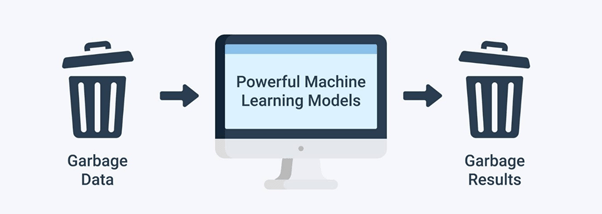
- What data do I have? Without quality data, even the most sophisticated algorithms will be ineffective.
- Do I need explanations for the AI’s decisions? Some models are more “transparent” than others.
- What are my technical and budget constraints? AI solutions vary enormously in terms of cost and complexity.
Conclusion: The Future is Hybrid
I’m convinced that the future of AI won’t be dominated by a single approach, but by hybrid systems combining different techniques to overcome their respective weaknesses.
What about you, which AI technology intrigues you the most? Have you already experimented with some of them? Share your experience in the comments – I love discovering new creative uses of these technologies!

 MasterDataDNA