

In the evolving world of data architecture, Data Lakes and Data Warehouses are two foundational pillars. If you’re a data professional, architect, or business leader trying to choose between them—or wondering how they work together this guide is for you.
What Is a Data Lake?
A data lake is a centralized repository that allows you to store all your structured, semi-structured, and unstructured data at any scale. Think raw logs, videos, IoT streams, social media text, and more.
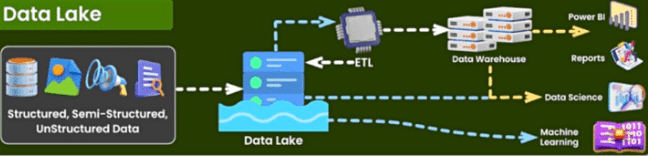
Key Characteristics:
- Stores raw data as-is (no need to structure it first)
- Built on cost-effective object storage (like Amazon S3, Azure Data Lake)
- Ideal for big data, AI/ML, and real-time analytics
- Schema-on-read (structure is applied when the data is read)
Typical Use Cases:
- Advanced analytics and data science
- Machine learning model training
- Real-time or near-real-time data ingestion
What Is a Data Warehouse?
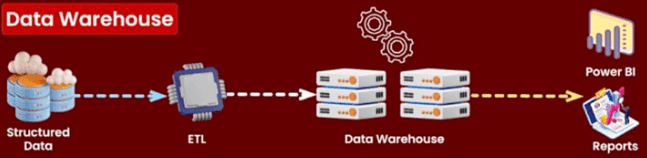
A data warehouse is a structured environment optimized for querying and reporting on historical data. It’s ideal for business intelligence (BI), dashboards, and standardized analytics.
Key Characteristics:
- Stores structured and curated data
- Optimized for performance and query speed
- Schema-on-write (structure is applied when data is ingested)
- Higher cost but excellent for operational efficiency and reliability
Typical Use Cases:
- Business reporting and KPI tracking
- Executive dashboards and OLAP queries
- Regulatory and compliance reporting
Data Lake vs Data Warehouse: A Side-by-Side Comparison
| Feature | Data Lake | Data Warehouse |
|---|---|---|
| Data Type | Structured, semi-structured, unstructured | Structured only |
| Storage Cost | Lower | Higher |
| Performance | Slower for queries | Fast and optimized for SQL queries |
| Data Processing | Schema-on-read | Schema-on-write |
| Best For | Data scientists, AI/ML, big data | BI analysts, executives, operations |
| Technology Examples | Hadoop, Azure Data Lake, Amazon S3 | Snowflake, Google BigQuery, Redshift |
Why You Might Need Both
The best modern data platforms use a lakehouse architecture. This architecture blends the scalability of a data lake with the performance and reliability of a data warehouse. Technologies like Databricks, Delta Lake, and Snowflake enable this hybrid approach.
Choosing the Right Approach
Here’s a simple rule of thumb:
- If your goal is exploration, ML, or massive-scale raw data ingestion, go with a Data Lake.
- If your goal is BI, structured reporting, and decision support, use a Data Warehouse.
- For most organizations, combining both is the way to go.
… Final Thoughts
The data lake vs data warehouse debate isn really about choosing one over the other. Its about understanding what each is best at and how to use them together. With the right strategy, you can power everything from deep analytics to business dashboards off the same data found.
Tags: data lake, data warehouse, data architecture, big data, business intelligence, data storage
 MasterDataDNA
Leave a comment